EMT Exam Prep 2025
Effective airway management is a critical skill for EMT candidates and emergency responders. The ability to secure and maintain a patient’s airway can mean the difference between life and death in emergency situations. This blog post will delve into essential airway management techniques, provide actionable study strategies, and highlight practical tips to enhance your proficiency in this vital area of emergency medical services (EMS).
Understanding Airway Management
Airway management encompasses a range of techniques and procedures aimed at ensuring that a patient’s airway remains open and unobstructed. In emergencies, patients may present with various airway challenges, including obstructed airways due to unconsciousness, trauma, or medical conditions. As an EMT, you must quickly assess the situation and implement appropriate interventions to facilitate ventilation and oxygenation.
Key Airway Management Techniques
1. Basic Airway Techniques
Head-Tilt, Chin-Lift Maneuver
One of the most fundamental techniques for airway management is the head-tilt, chin-lift maneuver. This technique is used to open the airway in unconscious patients without suspected spinal injuries. By tilting the head back and lifting the chin, you can reposition the tongue, which may be obstructing the airway.
Jaw-Thrust Maneuver
For patients with suspected spinal injuries, the jaw-thrust maneuver is preferred. This technique avoids flexing the neck, thus minimizing potential spinal cord injury. Practice this technique to ensure you can perform it effectively in high-pressure situations.
Oral Airway Insertion
An oropharyngeal airway (OPA) can be used for patients who are unresponsive but have no gag reflex. Insert the OPA by rotating it 180 degrees after reaching the back of the throat to avoid pushing the tongue further back. Familiarize yourself with the various sizes and indications for OPA use, as this knowledge will be essential for your NREMT exam.
2. Advanced Airway Techniques
Endotracheal Intubation
Endotracheal intubation is a procedure that involves placing a tube into the trachea to secure the airway and provide ventilation. While this is typically performed by paramedics or advanced life support providers, it is crucial for EMT candidates to understand the procedure and indications for intubation.
Preparation for Intubation
Ensure you have the necessary equipment, including a laryngoscope, endotracheal tubes of various sizes, and bag-valve mask (BVM) for pre-oxygenation. Study the correct positioning and technique for intubation to enhance your understanding of airway management protocols.
Supraglottic Airway Devices
Supraglottic airway devices, such as the King LT or LMA, offer a less invasive alternative to intubation while still providing effective ventilation. These devices can be quickly deployed and are especially useful in cases of cardiac arrest or when intubation is not feasible. Familiarize yourself with the indications, contraindications, and insertion techniques for these devices.
3. Patient Assessment and Monitoring
Airway Assessment
Before implementing any airway management technique, a thorough assessment must be conducted. Look for signs of respiratory distress, altered mental status, or anatomical abnormalities that may complicate airway management. Use the mnemonic “TACO” (Trauma, Airway, Circulation, Oxygenation) to guide your assessment.
Continuous Monitoring
Once the airway is secured, continuous monitoring is essential. Maintain awareness of the patient’s oxygen saturation levels and respiratory effort. Use pulse oximetry to evaluate oxygenation and be prepared to adjust your management techniques as needed.
Practical Study Tips for EMT Candidates
-
Hands-On Practice: Take advantage of simulation labs and practice sessions. Repeated practice of airway techniques will build muscle memory and increase your confidence.
-
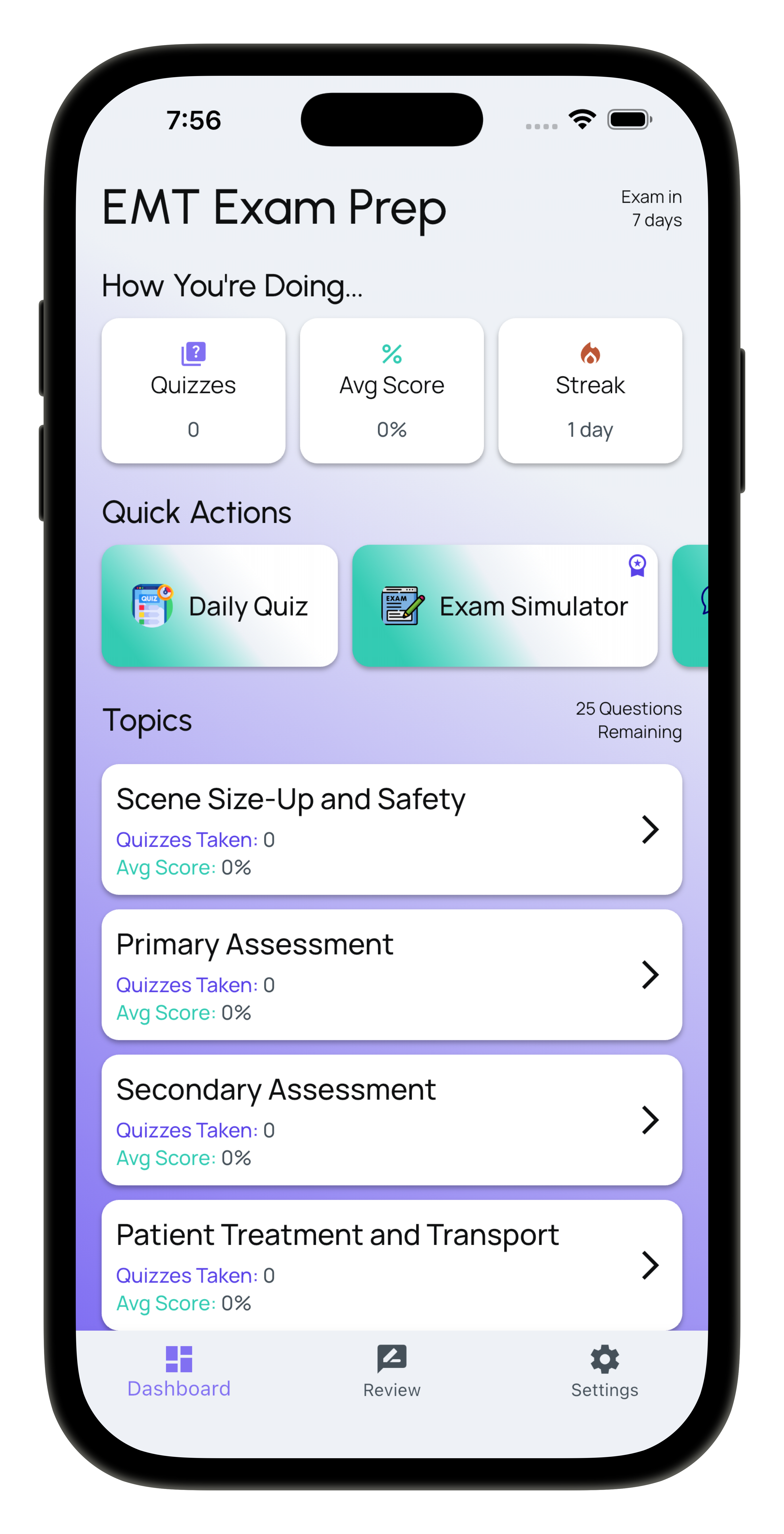
Utilize EMT Exam Prep Resources: Leverage the NREMT-style practice questions and explanations available in the EMT Exam Prep app to test your knowledge of airway management. Focus on areas where you feel less confident.
-
Collaborate with Peers: Work with fellow students to practice scenarios involving airway management. This collaboration can help reinforce learning and provide different perspectives on handling airway emergencies.
-
Stay Updated on Protocols: Regularly review the latest airway management protocols and guidelines from the National Registry of Emergency Medical Technicians (NREMT) to ensure you are familiar with standard practices.
Conclusion
Mastering airway management techniques is essential for EMT candidates and emergency responders. By understanding both basic and advanced airway management strategies, conducting thorough patient assessments, and continuously practicing your skills, you can significantly enhance your proficiency in this critical area. As you prepare for your EMT certification exam, remember that effective airway management not only contributes to your success as a candidate but also plays a crucial role in ensuring patient safety in real-world emergencies. Utilize the resources available through EMT Exam Prep to strengthen your knowledge and skill set, setting yourself up for success in your EMS career.
Ready to become a certified EMT? Try EMT Exam Prep 2025 for comprehensive NREMT-style practice questions with detailed explanations covering all essential certification content areas.