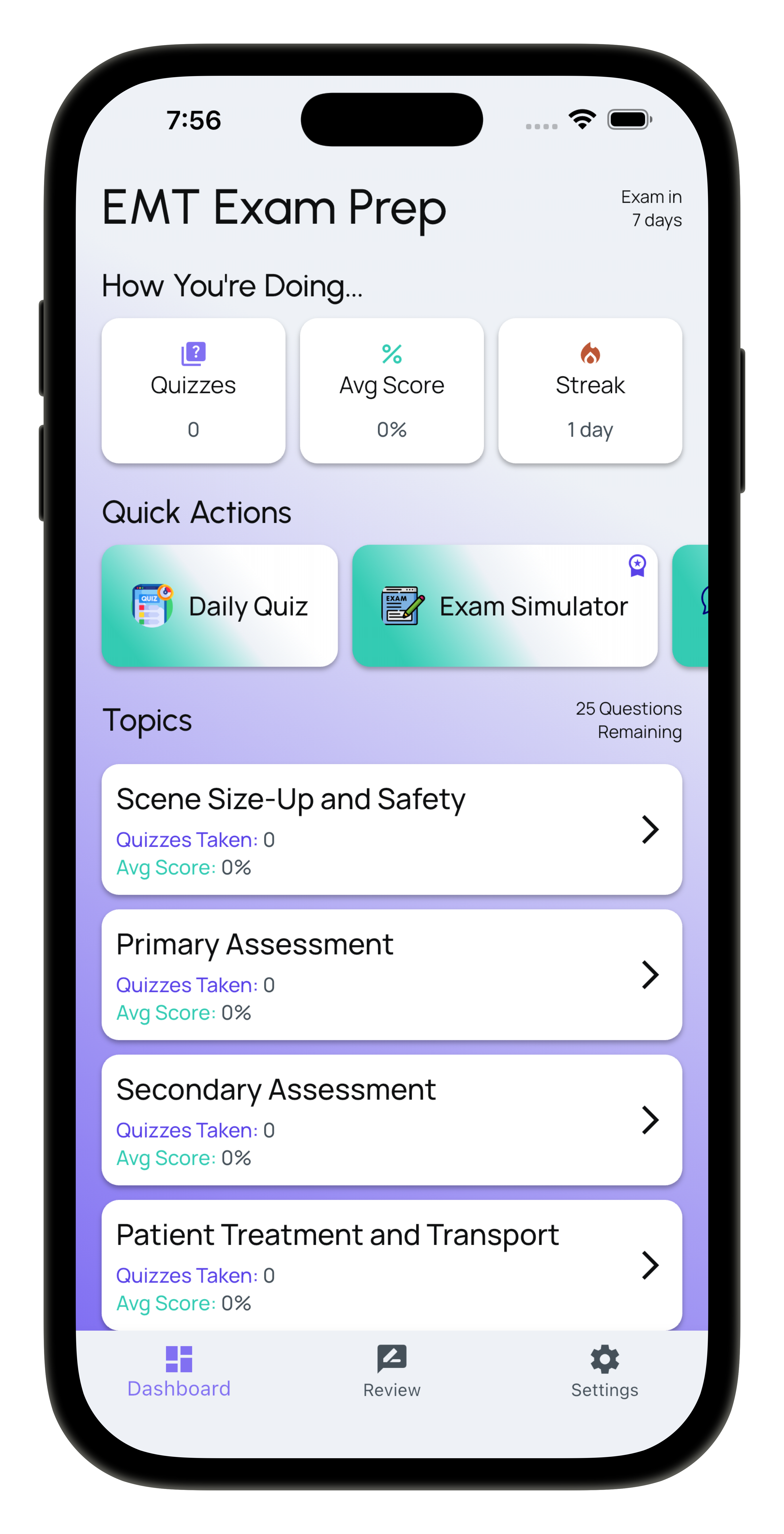
EMT Exam Prep 2025
Airway management is a fundamental skill for EMT candidates and emergency responders, serving as a critical component of patient care in emergency situations. Whether responding to a trauma call or managing a medical emergency, the ability to secure and maintain a patent airway can significantly impact patient outcomes. This blog post explores essential airway management techniques, provides practical tips for mastering these skills, and aligns with the NREMT standards to help you prepare for your certification exam.
Understanding Airway Management
Airway management encompasses a range of techniques used to ensure that a patient’s airway remains clear and unobstructed. In emergency medical services (EMS), effective airway management is vital for maintaining oxygenation and preventing complications, such as hypoxia. As an EMT, you will often encounter various scenarios requiring different airway management approaches, including:
- Basic Airway Management: Techniques such as the head-tilt, chin-lift maneuver and the use of oropharyngeal (OPA) and nasopharyngeal (NPA) airways.
- Advanced Airway Management: Techniques including endotracheal intubation, supraglottic airway devices, and the use of cricothyrotomy.
Basic Airway Management Techniques
1. Head-Tilt, Chin-Lift Maneuver
The head-tilt, chin-lift maneuver is the most commonly used technique to open the airway in patients without suspected spinal injuries. Here’s how to perform it:
- Position the patient supine on a flat surface.
- Place one hand on the forehead and gently tilt the head back.
- Use the fingers of the other hand to lift the chin forward, which helps open the airway.
Tip: Avoid excessive extension in elderly patients or those with possible spinal injuries. In such cases, consider using the jaw-thrust maneuver instead.
2. Oropharyngeal Airway (OPA)
An OPA is a curved device designed to keep the tongue from obstructing the airway. Here’s how to properly insert it:
- Ensure the patient is unresponsive and has no gag reflex.
- Choose the correct size (measured from the corner of the mouth to the angle of the jaw).
- Insert the OPA upside down (curved side facing the roof of the mouth) and rotate it 180 degrees as you advance it.
Practical Takeaway: Always monitor the patient after OPA insertion for proper placement and effectiveness. If the patient begins to gag or cough, remove the OPA immediately.
3. Nasopharyngeal Airway (NPA)
The NPA is a flexible tube inserted through the nose into the pharynx. It’s suitable for patients with a gag reflex or those who are semi-conscious. Here’s how to insert it:
- Choose the appropriate size (from the tip of the nose to the earlobe).
- Lubricate the end of the NPA with a water-soluble lubricant.
- Insert the NPA into the larger nostril, aiming towards the ear. If resistance is felt, do not force it and instead try the other nostril.
Tip: Be cautious in patients with facial injuries or suspected skull fractures, as this could introduce the airway into the cranial cavity.
Advanced Airway Management Techniques
1. Endotracheal Intubation
Endotracheal intubation is a critical skill for advanced airway management. Here’s a simplified approach:
- Pre-oxygenate the patient using a bag-valve mask (BVM) for 3-5 minutes.
- Use laryngoscope to visualize the vocal cords and insert the endotracheal tube (ETT) through the vocal cords.
- Inflate the cuff and confirm placement by auscultation of breath sounds bilaterally and observing chest rise.
Study Strategy: Familiarize yourself with the anatomy of the airway and practice the technique on manikins. Understanding the landmarks will enhance your confidence during the actual procedure.
2. Supraglottic Airway Devices
Supraglottic devices, such as the King LT or LMA (Laryngeal Mask Airway), can be used when intubation is unsuccessful or difficult. They are easier to place and can provide a secure airway quickly.
Insertion Steps:
- Position the patient appropriately.
- Lubricate the device and insert it into the mouth, guiding it over the tongue until resistance is felt.
- Inflate the cuff as instructed.
Tip: Always have a backup plan. If you cannot secure the airway with a supraglottic device, be prepared to attempt intubation or use alternative methods.
Clinical Insights for Effective Airway Management
- Assessment is Key: Always assess the patient’s airway before and after any intervention. Look for signs of obstruction or inadequate ventilation.
- Continuous Monitoring: Utilize capnography (if available) to monitor the effectiveness of ventilation and confirm proper tube placement.
- Team Communication: Collaborate with your team during airway management procedures. Clear communication is essential, especially in high-stress situations.
Conclusion
Mastering airway management techniques is crucial for EMT candidates and emergency responders. With a solid understanding of basic and advanced airway management, you can significantly enhance patient outcomes and ensure safety in emergency situations. By incorporating these techniques into your study routines and practical training, you will not only prepare effectively for your NREMT certification exam but also develop the confidence needed for real-world emergencies.
As you continue your journey toward EMT certification, remember that the EMT Exam Prep app is an invaluable resource. With NREMT-style practice questions and detailed explanations, it equips you with the knowledge and skills necessary to succeed. Stay focused, practice diligently, and prioritize patient safety—your future patients will thank you.
Ready to become a certified EMT? Try EMT Exam Prep 2025 for comprehensive NREMT-style practice questions with detailed explanations covering all essential certification content areas.