EMT Exam Prep 2025
As an Emergency Medical Technician (EMT), you stand at the forefront of patient care, often being the first point of contact in critical situations. Your role is not only vital in providing immediate medical assistance but also in navigating the pathways of your career. The journey doesn’t end upon certification; rather, it opens doors to various career opportunities and continuous learning. In this blog post, we will explore potential career paths for EMTs, the importance of ongoing education, and practical strategies to propel your career forward.
Career Paths for EMTs
1. Advanced EMT and Paramedic
One of the most common advancements for EMTs is to pursue further education and training to become an Advanced EMT (AEMT) or a Paramedic. Both roles involve more advanced skills and responsibilities, including administering medications, performing advanced airway management, and providing critical care during transport.
- Advanced EMT (AEMT): A step above the basic EMT level, AEMTs have additional training in certain advanced skills, including IV therapy and administering limited medications.
- Paramedic: This is a significant leap in terms of education and responsibility. Paramedics undergo extensive training (typically a 1,200- to 1,800-hour program) that covers advanced life support, pharmacology, and critical care procedures. The National Registry of Emergency Medical Technicians (NREMT) outlines the requirements for becoming a paramedic, which include practical skills assessments and a comprehensive written exam.
2. Specialization Areas
As you gain experience, consider specializing in areas like:
- Critical Care Transport: Transporting critically ill patients between facilities requires specialized training in advanced life support and critical care protocols.
- Flight Paramedic: This role involves working on air ambulances, requiring advanced skills in emergency medicine and often additional training in aviation safety.
- Tactical Paramedic: Collaborating with law enforcement, tactical paramedics provide medical support during high-risk operations.
Each specialization demands a commitment to continued education and training. The NREMT and other professional organizations offer resources and certifications specific to these fields.
3. Education and Training Roles
If you have a passion for teaching, consider transitioning into a training or education role. EMTs can become instructors for EMT training programs or continuing education courses. This path not only allows you to share your knowledge but also deepens your understanding of the material.
- Continuing Education Instructor: Teaching new EMTs or offering refresher courses can enhance your skills and knowledge while helping to shape the next generation of emergency responders.
Importance of Continuing Education
Lifelong Learning for EMTs
Continuing education is crucial in the rapidly evolving field of emergency medicine. Staying current with the latest protocols, technologies, and best practices is essential for ensuring patient safety and delivering high-quality care.
- NREMT Recertification: EMTs must complete continuing education requirements to maintain certification. This includes completing a specific number of hours in approved courses and skills training every two years.
Professional Development Opportunities
Participating in workshops, conferences, and online courses can enhance your skills and knowledge. Consider joining professional organizations like the National Association of Emergency Medical Technicians (NAEMT) or your local EMS association. These organizations often provide access to continuing education resources, networking opportunities, and career advancement information.
Practical Study Tips for EMTs
-
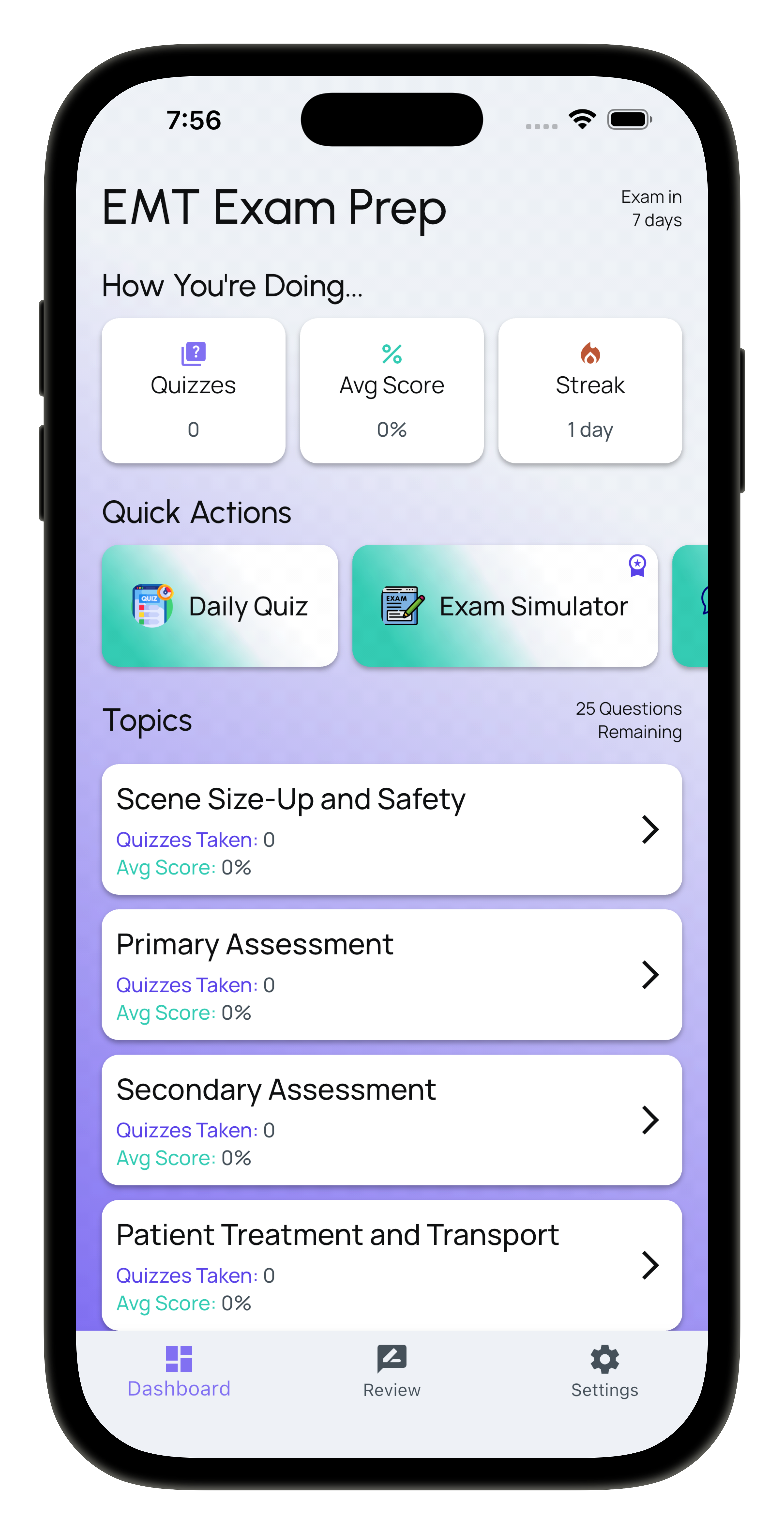
Utilize Study Resources: Leverage the EMT Exam Prep mobile app, which offers NREMT-style practice questions and detailed explanations. This resource is invaluable for mastering the exam content and reinforcing your knowledge.
-
Create a Study Schedule: Develop a consistent study plan that includes regular review of materials. Break down topics into manageable sections to avoid feeling overwhelmed.
-
Engage in Hands-On Practice: Whenever possible, practice skills in real-life scenarios or simulations. This hands-on experience is crucial for reinforcing theoretical knowledge.
-
Join Study Groups: Collaborating with peers can enhance your understanding of complex topics. Study groups can provide support, motivation, and different perspectives on challenging material.
-
Seek Feedback: Regularly seek feedback from instructors or experienced EMTs on your skills and knowledge. Constructive criticism is a powerful tool for improvement.
Conclusion: Charting Your Course to EMT Certification Success
As you embark on your journey as an EMT, remember that your career is a dynamic pathway filled with opportunities for growth and advancement. By pursuing further education, exploring specialization options, and committing to lifelong learning, you can enhance your skills and improve patient outcomes. The right resources, such as the EMT Exam Prep app, can significantly aid your preparation and help you achieve certification success. Embrace the journey, invest in your future, and become the best EMT you can be. Your dedication not only propels your career but also ensures that you provide the highest level of care to those in need.
Ready to become a certified EMT? Try EMT Exam Prep 2025 for comprehensive NREMT-style practice questions with detailed explanations covering all essential certification content areas.