EMR Exam Prep
As you embark on your journey to becoming an Emergency Medical Responder (EMR), one of the most crucial skills you will develop is your understanding of medical terminology. This specialized language is essential for effective communication in emergency situations and can significantly enhance your ability to provide care. In this blog post, we will explore basic emergency medical concepts and skills, provide practical training and study tips, offer real-world application examples, and discuss career guidance for new EMRs. Let’s dive in!
The Importance of Medical Terminology in Emergency Medical Response
Medical terminology forms the backbone of effective communication within the healthcare field. For EMRs, it is vital to be familiar with the terms used to describe anatomy, procedures, and interventions. Understanding these terms will not only help you in your training and exams but will also ensure you can communicate clearly with other medical professionals during critical situations.
Basic Emergency Medical Concepts
-
Anatomy and Physiology: Knowing the basic structures and functions of the human body is the foundation of emergency medicine. Familiarize yourself with anatomical terms related to body parts (e.g., proximal, distal, anterior, posterior) and systems (e.g., cardiovascular, respiratory).
-
Assessment Techniques: Understanding terminology related to patient assessment (e.g., vital signs, history taking, and physical examination) will help you perform thorough evaluations. Key terms include tachycardia (increased heart rate), bradycardia (decreased heart rate), and dyspnea (difficulty breathing).
-
Common Medical Conditions: Learn the terminology associated with common emergencies, such as myocardial infarction (heart attack), stroke, and allergic reactions. This knowledge will aid in quick recognition and response.
Practical Training and Study Tips
-
Flashcards: Create flashcards for medical terms, definitions, and their applications. Use the flashcards to quiz yourself regularly. This method reinforces memory retention and makes studying more interactive.
-
Practice Scenarios: Engage in role-playing exercises with classmates or study partners. Create scenarios where you utilize medical terminology to assess and respond to patient needs. This will help you apply what you have learned in a practical setting.
-
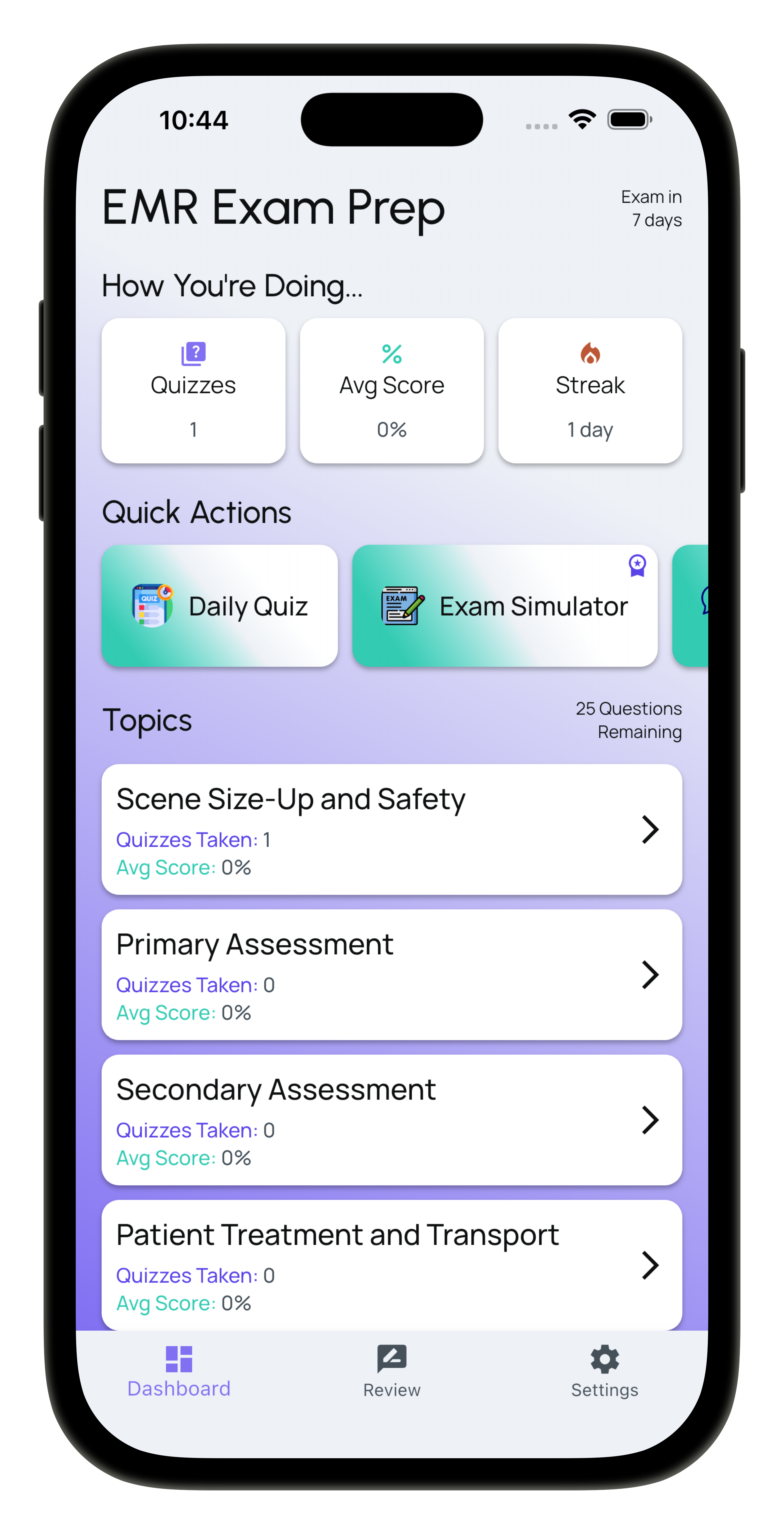
Online Resources: Use the EMR Exam Prep app to access practice questions and study materials. The app offers a variety of resources tailored to help you succeed in your EMR certification exam, including medical terminology quizzes and real-world case studies.
-
Group Study Sessions: Collaborate with fellow students to discuss and review medical terms. Group discussions can foster a deeper understanding and help clarify any confusion.
Real-World Application Examples
-
Communicating with Other Responders: Imagine you are at the scene of a motor vehicle accident. You assess a patient who exhibits signs of shock. By using terms like “hypotension” (low blood pressure) and “tachycardia,” you can effectively communicate the patient’s condition to arriving paramedics.
-
Documenting Patient Care: Proper documentation is critical in emergency medicine. When writing patient reports, clarity and accuracy are key. For example, instead of saying the patient is “not breathing well,” use the term “respiratory distress” to convey the seriousness of the situation.
-
Administering Medications: Understanding terminology related to medications (e.g., dosages, routes of administration) is crucial for safe practice. For example, knowing the difference between “intramuscular” and “intravenous” can impact how quickly and effectively a medication is delivered.
Career Guidance for New EMRs
-
Continuous Learning: The field of emergency medicine is always evolving. Stay updated with the latest protocols, treatments, and technologies. Consider enrolling in advanced courses related to emergency medical care.
-
Networking Opportunities: Join local EMS organizations or online forums to connect with other professionals. Networking can lead to mentorship opportunities and valuable insights into your career path.
-
Explore Specializations: As you gain experience, consider areas of specialization such as wilderness medicine, tactical EMS, or pediatric emergencies. Specializing can open doors to new career opportunities and enhance your skill set.
Safety Considerations and Best Practices
-
Personal Safety: Always prioritize your safety and the safety of others. Wear appropriate personal protective equipment (PPE) and follow established protocols when responding to emergencies.
-
Scene Safety: Before entering a scene, assess for potential hazards. Use terms like “hazardous materials” or “potential violence” to communicate risks to your team.
-
Patient Safety: Ensure that you follow protocols for patient care, such as obtaining consent and maintaining confidentiality. Use clear terminology to explain procedures to patients, which can help alleviate their anxiety.
Conclusion
Understanding medical terminology is an essential step in your journey as an Emergency Medical Responder. By mastering this language, you will enhance your ability to communicate effectively, provide quality care, and document patient interactions. Utilize the resources available through EMR Exam Prep, engage in practical exercises, and take advantage of networking opportunities to support your growth in this rewarding field. Remember, every expert was once a beginner—embrace the learning process and stay committed to your training. Your dedication will make a significant difference in the lives of those you serve!
Starting your EMR certification journey? Try EMR Exam Prep for practice questions and study materials designed to help you succeed as an Emergency Medical Responder.