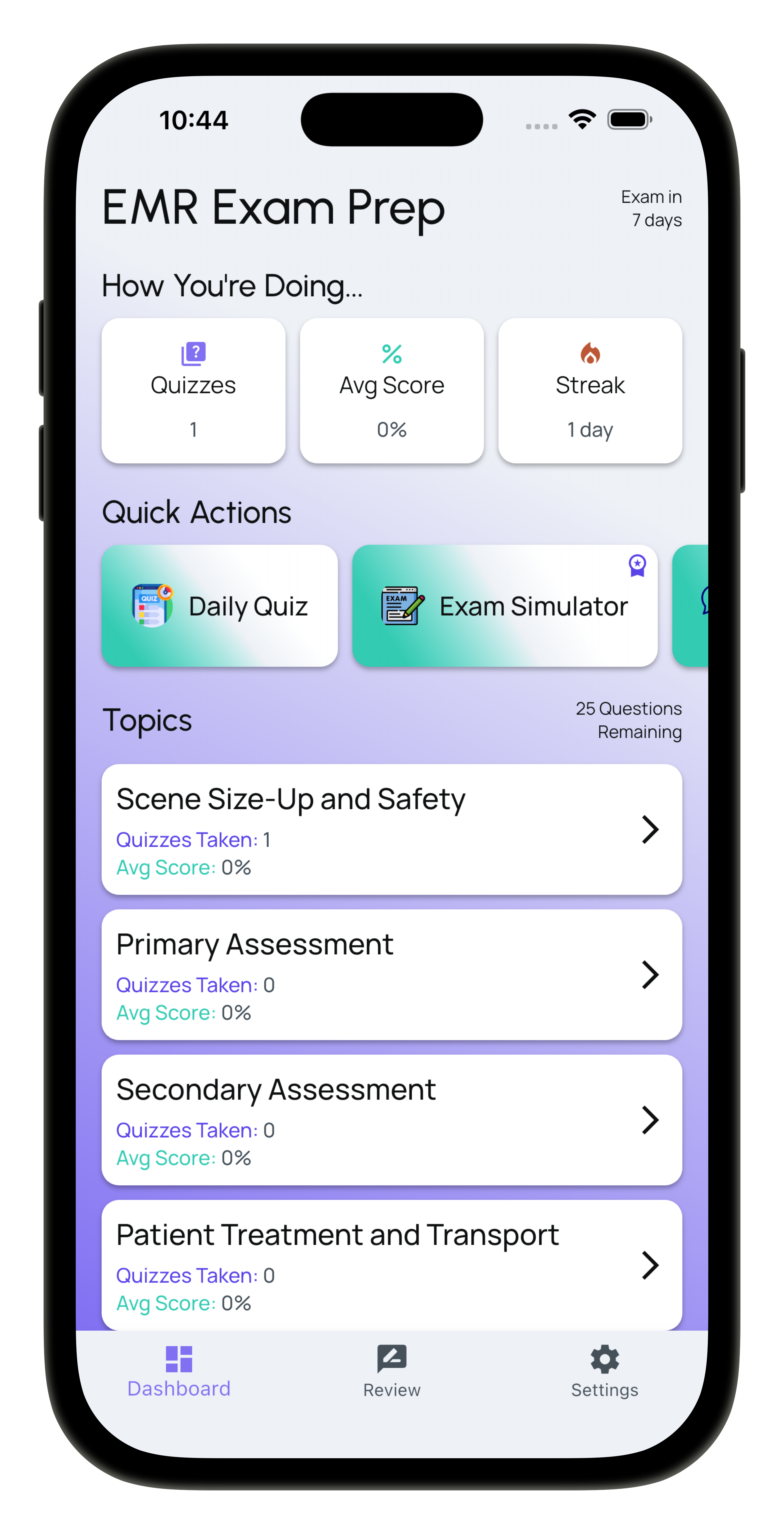
EMR Exam Prep
As an aspiring Emergency Medical Responder (EMR), you’re entering a field where effective communication can be the difference between life and death. Whether you’re a volunteer in a rural EMS service or a student starting your EMS career, honing your communication skills is crucial for success in emergency medical situations. In this blog post, we’ll explore the significance of communication in emergency medical settings, provide practical training tips, and offer real-world scenarios to help you excel in your EMR journey.
Understanding Basic Emergency Medical Concepts
Before diving into the intricacies of communication, it’s essential to grasp the foundational concepts of emergency medical care:
-
Assessment: Quickly assessing the scene and the patient is the first step in any emergency situation. This includes identifying hazards, determining the mechanism of injury, and evaluating the patient’s condition.
-
Basic Life Support (BLS): Knowledge of BLS protocols, including CPR and the use of an Automated External Defibrillator (AED), is fundamental. Communicating clearly during these procedures is vital for effective teamwork.
-
First Aid Skills: Skills such as wound care, splinting, and managing shock are crucial. While performing these tasks, you must communicate your actions to the patient and any bystanders or team members.
The Role of Communication in Emergencies
Effective communication in emergency medical situations encompasses several key areas:
1. Patient Interaction
Establishing trust and rapport with patients can help ease their anxiety. Use clear, simple language, and actively listen to their concerns. For example, saying, “I’m here to help you. Can you tell me what happened?” can help the patient feel more comfortable.
2. Team Coordination
In many emergencies, you’ll be working alongside other responders. Clear and concise communication is essential for coordinating care. Use standardized terms and avoid jargon. For instance, instead of saying, “I need the thing for the heart,” say, “Please bring the AED.”
3. Scene Communication
Ensure that everyone on the team is aware of the scene’s dynamics. Communicate any hazards, the number of patients, and the need for additional resources. For example, if there are multiple victims, you might say, “We have three injured individuals; I need one person to assess the first patient while I stabilize the second.”
Practical Training and Study Tips
Here are some actionable tips to enhance your communication skills as you prepare for your EMR certification:
1. Participate in Hands-On Training
Engage in simulation drills that mimic real-life scenarios. Practicing with peers in controlled environments helps you develop your verbal and non-verbal communication skills.
2. Role-Playing Exercises
Participate in role-playing exercises where you take turns being the patient and the responder. This can help you understand how to convey empathy and compassion while maintaining professionalism.
3. Study Communication Protocols
Familiarize yourself with communication protocols such as the SBAR (Situation, Background, Assessment, Recommendation) technique, which can help you clearly relay critical information to your team and medical personnel.
4. Join Study Groups
Consider joining a study group with fellow EMR students. Discussing scenarios and practicing communication can reinforce your skills and build confidence.
Real-World Application Examples
Let’s look at a couple of real-world scenarios where communication played a crucial role:
Scenario 1: Car Accident
You arrive at the scene of a car accident. There are two vehicles involved, and one driver appears unconscious. You assess the situation and quickly relay the information to your team: “We have an unconscious male driver in vehicle one. I’ll check for responsiveness while you call for additional resources and start CPR if needed.”
In this case, clear communication helps ensure that everyone knows their role while prioritizing patient care.
Scenario 2: Medical Emergency at a Community Event
At a community event, a participant collapses. You rush to the scene and find that bystanders are panicking. You calmly direct one bystander to call 911, another to retrieve the AED, and begin assessing the patient. You say, “Stay calm, everyone. I need you to call for help, and I’ll take care of this person.”
Your ability to communicate effectively not only helps in managing the patient but also reassures bystanders, creating a more organized response.
Career Guidance for New EMRs
As you embark on your career as an Emergency Medical Responder, keep the following in mind:
1. Continuous Learning
Emergency medical care is an evolving field. Stay updated on the latest protocols, techniques, and communication practices through ongoing education and training.
2. Networking
Engage with experienced EMRs and other medical professionals. Their insights can provide valuable guidance on effective communication in various situations.
3. Seek Feedback
After drills or real-life scenarios, seek feedback from peers and mentors on your communication style. Constructive criticism can help you refine your approach.
Safety Considerations and Best Practices
Effective communication goes hand in hand with safety. Here are some best practices to keep in mind:
-
Use Personal Protective Equipment (PPE): Always communicate the need for and use of PPE when necessary.
-
Be Aware of Your Surroundings: Constantly assess for any potential hazards and communicate them to your team.
-
Stay Calm and Collected: In high-pressure situations, maintaining a calm demeanor can help you communicate more effectively and reduce anxiety among team members and patients.
Conclusion
As you embark on your journey to become an Emergency Medical Responder, remember that communication is a critical skill that can enhance your effectiveness in the field. By mastering basic emergency medical concepts, practicing through simulations, and employing clear communication strategies, you’ll be well on your way to making a positive impact in your community.
For more study resources, practice questions, and guidance as you prepare for your EMR certification, be sure to explore the EMR Exam Prep app. Remember, every great responder starts with a single step—keep learning, stay safe, and make a difference!
Starting your EMR certification journey? Try EMR Exam Prep for practice questions and study materials designed to help you succeed as an Emergency Medical Responder.