EMT Exam Prep 2025
As an Emergency Medical Technician (EMT), your role extends far beyond simply responding to emergencies. A crucial aspect of your responsibilities involves understanding pharmacology—the study of drugs and their effects on the human body. Whether you are preparing for the National Registry of Emergency Medical Technicians (NREMT) certification exam or seeking to enhance your clinical knowledge, mastering pharmacology is essential for providing effective patient care. In this blog post, we will delve into the pharmacology essentials every EMT candidate should know, along with actionable study strategies to help you succeed in your EMT certification journey.
Understanding the Basics of Pharmacology
What is Pharmacology?
Pharmacology is the science that examines how medications interact with biological systems. It encompasses the study of drug properties, mechanisms of action, therapeutic uses, side effects, and interactions. For EMTs, a solid understanding of pharmacology is vital, as it allows you to administer medications safely and effectively in emergency situations.
Key Terminology
Before diving deeper into specific medications, familiarize yourself with essential pharmacological terms:
- Pharmacokinetics: The study of how the body absorbs, distributes, metabolizes, and excretes drugs.
- Pharmacodynamics: The study of the effects of drugs on the body and the mechanisms through which they exert their effects.
- Indication: A valid reason to use a particular medication.
- Contraindication: A situation or condition where a drug should not be used due to potential harm.
- Adverse Effects: Unintended side effects or reactions caused by a medication.
Core Medications for EMTs
Common Drug Classes
As an EMT, you will encounter a variety of medications. Familiarize yourself with these common drug classes and their uses:
- Analgesics: Pain relievers like acetaminophen and ibuprofen are often used to manage acute pain.
- Antipyretics: Medications such as aspirin and acetaminophen reduce fever.
- Antihistamines: Drugs like diphenhydramine treat allergic reactions and relieve symptoms.
- Bronchodilators: Medications such as albuterol are critical for treating respiratory distress in conditions like asthma.
- Cardiovascular Medications: Drugs like nitroglycerin and aspirin are used in cardiac emergencies to improve outcomes.
Specific Medications to Know
While the list of medications is extensive, here are a few key drugs that EMTs must be well-versed in:
- Aspirin: Used for chest pain associated with potential cardiac events. It acts as an antiplatelet agent to prevent clot formation.
- Epinephrine: Administered in cases of severe allergic reactions (anaphylaxis) to reverse airway constriction and improve blood flow.
- Nitroglycerin: Used for chest pain due to angina or myocardial infarction. It helps dilate blood vessels, reducing cardiac workload.
Practical Tips for Studying Pharmacology
Utilize NREMT-Style Practice Questions
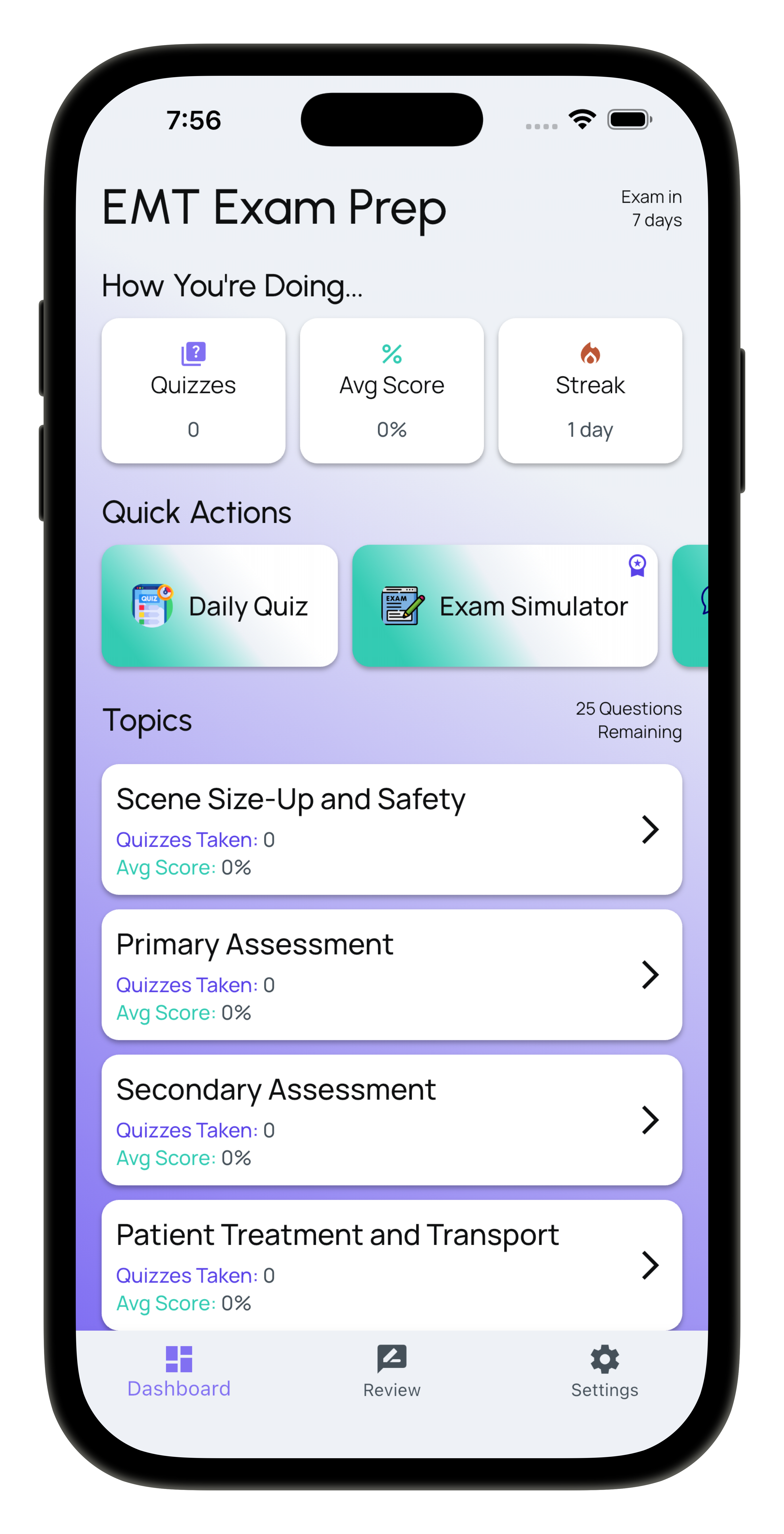
To prepare effectively for the NREMT exam, practice with questions that mimic the style and content of the actual test. The EMT Exam Prep mobile app offers a wealth of NREMT-style practice questions with detailed explanations, allowing you to gauge your understanding of pharmacology concepts and applications.
Create a Study Schedule
Organize your study time to focus on pharmacology systematically. Break down your study sessions into manageable chunks, dedicating specific time blocks to different drug classes and their uses. Consistent, short study sessions are often more effective than cramming.
Use Flashcards
Flashcards are a fantastic tool for memorizing drug names, classifications, indications, and contraindications. Create a set of flashcards for the medications you must know for the exam and review them regularly to reinforce your memory.
Engage in Group Study
Consider forming a study group with your fellow EMT candidates. Discussing pharmacology topics, quizzing each other, and explaining concepts can enhance your understanding and retention of critical information. Collaborative learning can also provide different perspectives and insights.
Conclusion: Your Path to EMT Certification Success
Incorporating pharmacology into your EMT training is not merely an academic exercise; it is a critical component of providing safe and effective patient care in emergency situations. By mastering key pharmacological concepts, familiarizing yourself with common medications, and employing effective study strategies, you will be better prepared for your NREMT certification exam.
EMT Exam Prep is dedicated to helping you succeed in your certification journey. Our mobile app offers the resources you need to excel, from practice questions to in-depth explanations of pharmacological principles. Remember, your knowledge and skills as an EMT can make a significant difference in the lives of the patients you serve. Embrace the challenge, and let pharmacology be a cornerstone of your emergency medical training.
Ready to become a certified EMT? Try EMT Exam Prep 2025 for comprehensive NREMT-style practice questions with detailed explanations covering all essential certification content areas.