EMR Exam Prep
Congratulations on taking the first step in your emergency medical career by becoming an Emergency Medical Responder (EMR)! As an EMR, you have already begun to build a solid foundation in basic life support and first aid skills. However, if you’re aiming to progress to higher levels of EMS certification, such as EMT or paramedic, it’s essential to understand the transition process, enhance your skills, and prepare yourself for the next step in your career. In this blog post, we will explore basic emergency medical concepts and skills, practical training tips, real-world application examples, career guidance, and important safety considerations. Let’s dive in!
Understanding Basic Emergency Medical Concepts and Skills
As an EMR, you have learned critical emergency medical concepts and skills that serve as the foundation for your future training. Here are some key areas to focus on:
1. Basic Life Support (BLS)
BLS is a fundamental skill for all emergency responders. It includes:
- CPR Techniques: Understanding how to perform chest compressions and rescue breaths correctly.
- Use of an AED: Knowing how to operate an Automated External Defibrillator in cases of cardiac arrest.
2. Patient Assessment
Effective patient assessment is crucial in emergency situations. Familiarize yourself with:
- Primary Assessment: Evaluating the airway, breathing, circulation, and life-threatening conditions.
- Secondary Assessment: Conducting a thorough head-to-toe examination and obtaining the patient’s medical history.
3. First Aid Skills
First aid skills, such as wound care, splinting fractures, and controlling bleeding, are essential competencies for any EMR. Practice these skills regularly to build your confidence and proficiency.
4. Communication Skills
Clear communication with patients, bystanders, and other healthcare professionals is vital. Familiarize yourself with the terminology and protocols used in EMS to ensure effective information transfer.
Practical Training and Study Tips
Transitioning from an EMR to a higher EMS certification level requires dedication and a strategic approach to training. Here are some actionable tips to help you succeed:
1. Set Clear Goals
Identify what level of certification you want to pursue next (EMT or paramedic) and create a timeline for achieving that goal. Break your goals into smaller, manageable tasks.
2. Use EMR Exam Prep Resources
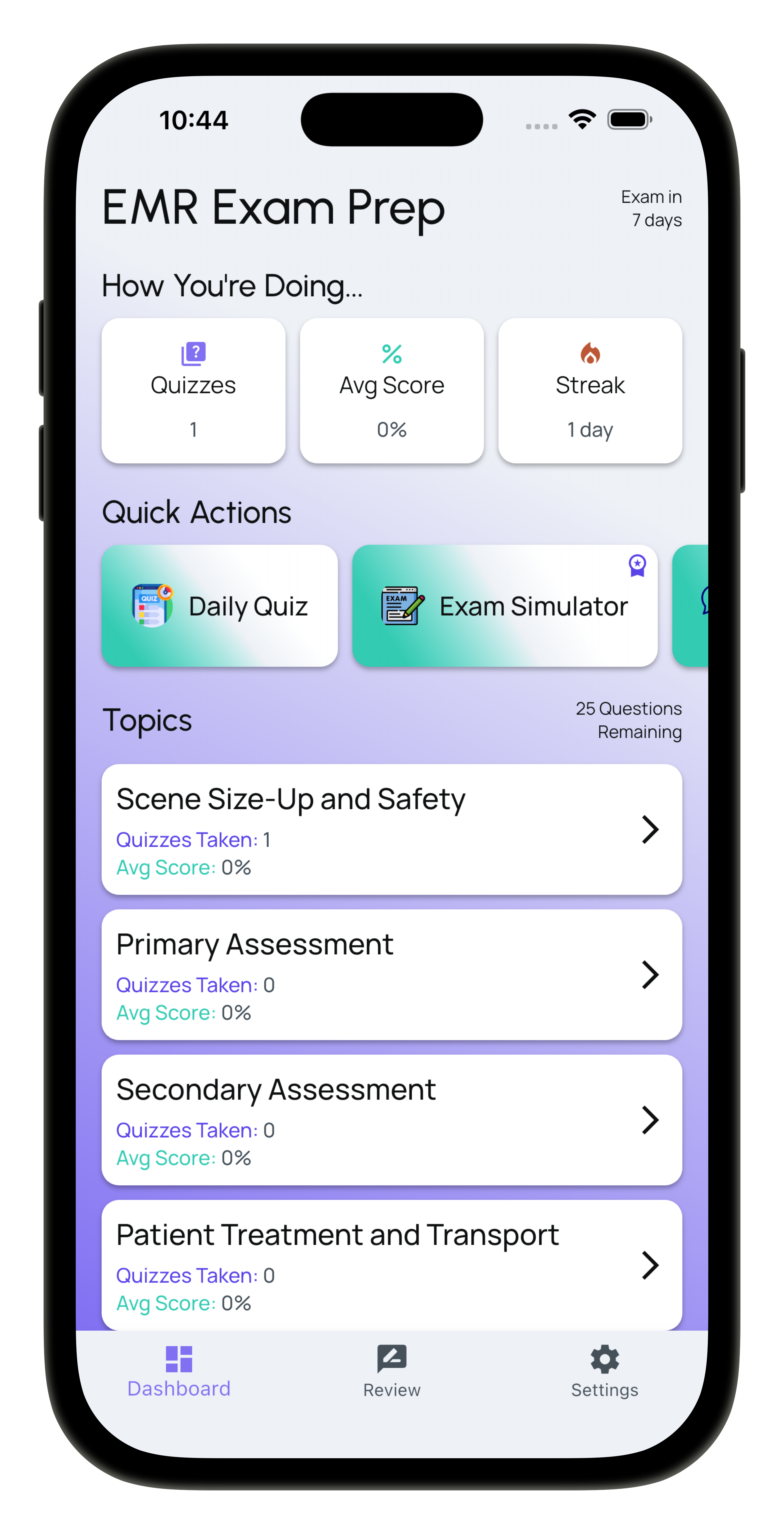
Leverage the EMR Exam Prep app to access practice questions, study materials, and quizzes tailored to your certification goals. Regularly test your knowledge and track your progress.
3. Join a Study Group
Collaborate with fellow EMR students or aspiring EMTs to form a study group. Sharing knowledge and discussing challenging topics can deepen your understanding and retention.
4. Engage in Hands-On Practice
Whenever possible, seek opportunities for hands-on practice. Volunteer with local EMS agencies, participate in ride-alongs, or enroll in practical skills workshops. The more you practice, the more comfortable you will become.
5. Take Advantage of Online Resources
In addition to the EMR Exam Prep app, explore online courses, webinars, and forums that focus on advanced EMS topics. Many organizations offer free or low-cost resources to help you on your journey.
Real-World Application Examples
To help you visualize the practical application of your skills, consider the following scenarios:
Scenario 1: Cardiac Arrest in a Public Place
As an EMR, your skills in CPR and AED use will be put to the test. In this scenario, your quick assessment and immediate response could save a life. Remember to call for advanced help (EMS) while performing CPR and using the AED.
Scenario 2: Traumatic Injury at a Sports Event
Imagine witnessing a player sustain a serious injury during a game. Your ability to perform a thorough assessment, control bleeding, and stabilize the injury will be vital. Communicate with the coaching staff and other responders to ensure a smooth transition of care when higher-level EMS arrives.
Scenario 3: Medical Emergency in a Home Setting
As an EMR, you may respond to a medical emergency in a home. Your knowledge of patient history and ability to perform a secondary assessment will help you relay critical information to incoming EMTs or paramedics, ensuring that the patient receives appropriate care swiftly.
Career Guidance for New EMRs
As you consider your next steps in your EMS career, keep the following tips in mind:
- Network with Other Professionals: Engage with experienced EMTs and paramedics to learn about their journeys and gather insights about advancing your career.
- Seek Mentorship: Find a mentor who can guide you through the transition process and provide valuable advice based on real-world experiences.
- Stay Current with Certifications: Regularly renew your certifications, including CPR and first aid, to maintain your skills and enhance your employability.
- Consider Specializations: Explore opportunities for specialization in areas such as wilderness medicine, tactical EMS, or community paramedicine as you progress in your career.
Safety Considerations and Best Practices
Safety is paramount in emergency medical services. Here are some best practices to keep in mind:
- Personal Protective Equipment (PPE): Always wear appropriate PPE to protect yourself and the patient from potential infections or hazards.
- Scene Safety: Before providing care, assess the scene for dangers such as traffic, fire, or hazardous materials. Ensure your safety before assisting others.
- Follow Protocols: Adhere to established protocols and guidelines to ensure that you provide safe and effective care.
Conclusion
Transitioning from EMR to higher levels of EMS certification is an exciting journey that opens up new opportunities in your career. By mastering basic emergency medical concepts, engaging in practical training, and utilizing resources like EMR Exam Prep, you can set yourself up for success. Remember, every step you take is a stride toward becoming a skilled and confident emergency medical professional. Embrace the challenges, stay motivated, and continue to learn, and you will achieve your goals in the EMS field!
Happy studying, and best of luck on your journey to becoming an exceptional EMT or paramedic!
Starting your EMR certification journey? Try EMR Exam Prep for practice questions and study materials designed to help you succeed as an Emergency Medical Responder.