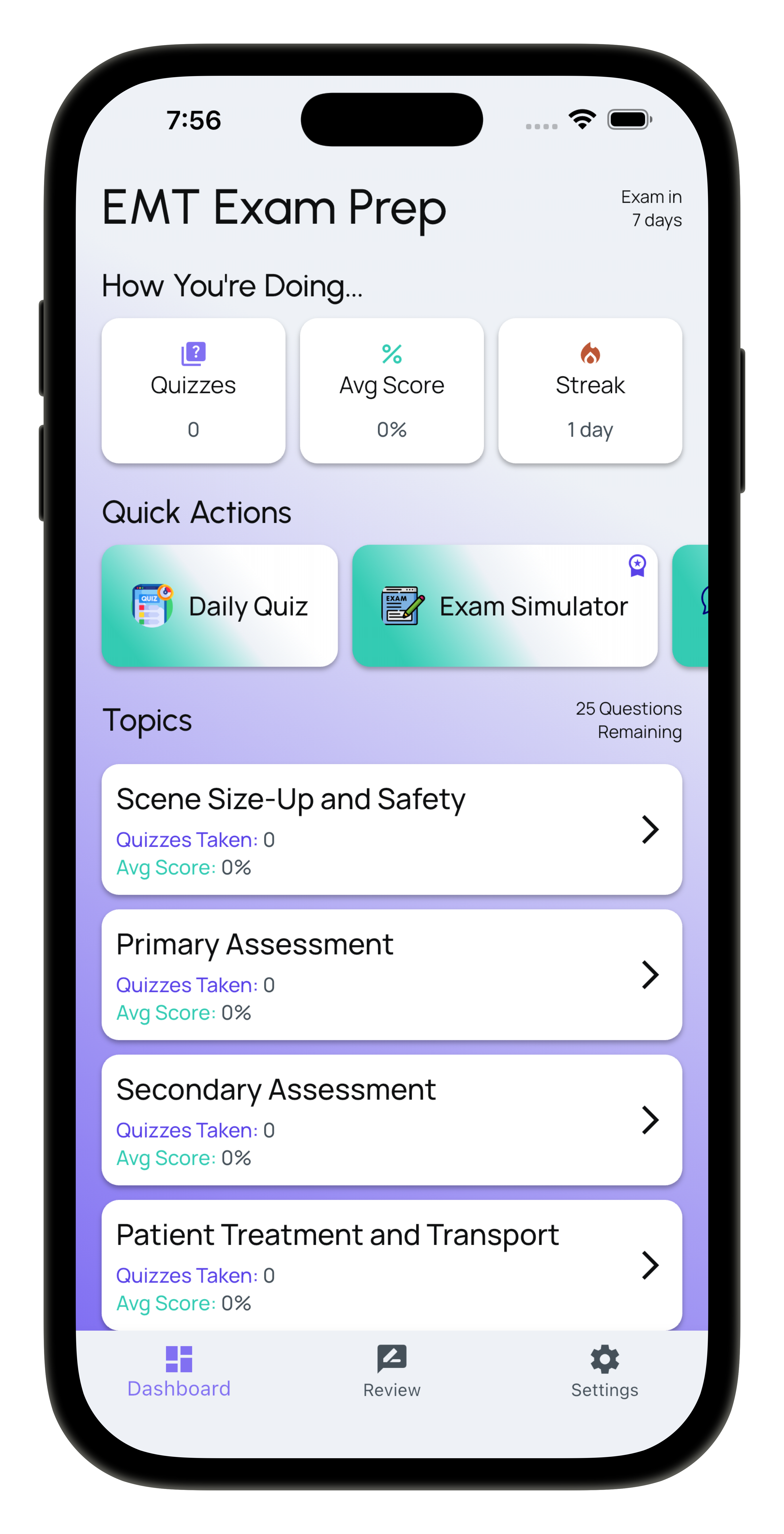
EMT Exam Prep 2025
In the high-stakes world of emergency medical services (EMS), the ability to conduct a thorough and efficient patient assessment can be the difference between life and death. For EMT candidates preparing for certification, understanding how to assess patients effectively is not just a skill; it’s a critical component of your training that will enhance your ability to provide the best possible care. This guide will delve into the essential elements of patient assessment, offering practical tips and strategies to prepare you for success in your EMT certification exam and beyond.
The Importance of Patient Assessment
Patient assessment is a systematic approach to gathering information about a patient’s condition, which is vital for determining the appropriate course of treatment. Effective assessment involves not only identifying the patient’s immediate medical needs but also understanding their history, environment, and any other factors that may impact care. The National Registry of Emergency Medical Technicians (NREMT) emphasizes that thorough assessments can significantly improve outcomes in emergency situations.
Components of Patient Assessment
- Scene Size-Up
- Before engaging with the patient, it’s essential to assess the scene for safety and potential hazards. Look for:
- Safety: Are there any dangers present (e.g., traffic, fire, hazardous materials)?
- Mechanism of Injury: What caused the patient’s condition? Understanding this can inform your assessment and treatment.
- Number of Patients: Is there more than one patient requiring care? This will dictate your response and resource allocation.
Tip: Always approach a scene with a “safety first” mindset. Use the mnemonic “PENMAN” (Personal Safety, Environmental Hazards, Number of Patients, Mechanism of Injury, Additional Resources, Need for Spinal Precautions) to remember essential considerations during a scene size-up.
- Before engaging with the patient, it’s essential to assess the scene for safety and potential hazards. Look for:
- Primary Assessment
- This step involves evaluating the patient’s airway, breathing, and circulation (the ABCs). The primary assessment is rapid but crucial for life-threatening conditions.
- Airway: Ensure the airway is clear. Look for obstructions and use appropriate techniques (e.g., the head-tilt-chin-lift maneuver).
- Breathing: Assess the quality of breathing. Is it adequate or inadequate? Look for signs of respiratory distress.
- Circulation: Check for pulse, skin color, and signs of shock. Rapidly identify any major bleeds.
Practical Example: If you encounter a patient with labored breathing and cyanosis, this immediate recognition in the primary assessment will prompt you to intervene quickly, potentially through oxygen administration or other interventions.
- This step involves evaluating the patient’s airway, breathing, and circulation (the ABCs). The primary assessment is rapid but crucial for life-threatening conditions.
- Secondary Assessment
- After the primary assessment, conduct a more detailed evaluation of the patient’s condition. This involves:
- History Taking: Use the SAMPLE acronym (Signs and Symptoms, Allergies, Medications, Past Medical History, Last Oral Intake, Events Leading Up) to gather pertinent information.
- Physical Examination: Perform a head-to-toe assessment to identify any injuries or abnormalities. Pay special attention to areas of potential trauma.
Tip: Practice your history-taking skills with classmates. Conduct mock assessments using the SAMPLE method, which is often a focus in NREMT examinations.
- After the primary assessment, conduct a more detailed evaluation of the patient’s condition. This involves:
- Ongoing Assessment
- Continuous monitoring is crucial, especially in dynamic emergency situations. After initial interventions, reassess the patient regularly for any changes in status. This includes repeating the ABCs and monitoring vital signs. Document any changes meticulously.
Practical Takeaway: Develop a routine for ongoing assessments. For instance, using a timer on your watch can help remind you to reassess every 5 minutes if the patient is unstable.
Study Strategies for Patient Assessment
-
Utilize Practice Questions: Engage with NREMT-style practice questions focusing on patient assessment scenarios. This will not only familiarize you with the exam format but also reinforce your understanding of the assessment process.
-
Simulation Training: Participate in hands-on simulation exercises where you can practice assessments in realistic scenarios. These simulations often mimic the pressure of real-life emergencies and enhance your clinical skills.
-
Group Study Sessions: Collaborate with peers to review assessment protocols. Teaching each other can reinforce your knowledge and highlight areas that need more focus.
Conclusion
Mastering patient assessment is a cornerstone of EMT training and essential for success in the NREMT certification exam. By understanding the components of assessment—scene size-up, primary assessment, secondary assessment, and ongoing evaluation—you’ll not only be well-prepared for your exam but also equipped to save lives in the field. Remember, effective patient assessment is not just about gathering information; it’s about making informed decisions that prioritize patient safety and care. As you continue your journey in emergency medical services, let the principles of thorough assessment guide your practice and enhance your capability as a healthcare provider. With the right preparation and skills, you can confidently step into your role as an EMT and make a significant difference in your community.
Ready to become a certified EMT? Try EMT Exam Prep 2025 for comprehensive NREMT-style practice questions with detailed explanations covering all essential certification content areas.